Clear Lake Chapter

Plant of the Month: Lemon Mint

Bev Morrison
May 9, 2022

Botanical name: Monarda citriodora
Common name(s): Lemon Mint, Beebalm, Lemon Beebalm, Horsemint, Horse Beebalm, Lemon Horsemint, Mint
Family: Lamiaceae (Mint)
Read: What’s in a name?


[MUS—EASY AND FUN]

[BEV] Plant of the Month is Monarda citriodora.

We’re in the time period 1493 to 1588. There was a physician and botanist named Nicolas Bautista Monardes. He never came to the Americas, but all the ship travel that was coming from the Old World to the New World were bringing him back samples to study.

One of those happened to be Monarda citriodora. He was able to establish for them, back in the day of primitive medicine, that this plant was good for respiratory and digestive problems. And he was known to have some success.

So, Linnaeus was impressed with his work and named a genus Monarda to honor him. Sorry, no pictures available. That’s a joke.

The Monarda genus is populated with many species—M. fistulosa, M. clinopodia, and M. didyma—to name a few. Our interest tonight is Monarda citriodora.

It is commonly called Beebalm, Lemon Mint, Lemon Beebalm, Horsemint, Horse Beebalm, Lemon Horsemint, and Mint. Lemon Mint is so named because if you crush the leaves and the flowers,
it will smell like lemon.

Visually, Lemon Mint has opposite leaves, circular wreaths of branches and flower petals. And these tuft-like whorled flowers can be pink through purple with touches of white. Several stems grow from the same base. It blooms in May, June, and July, and if watered in hot months, can remain in bloom into the fall. It is native to Texas and the south U.S. and parts of Mexico.

It grows 12 to 30 inches. Can spread 12 inches. And tolerates poor and rocky soil but really prefers sand. It is drought tolerant after established. It is a low water use plant and it will form colonies if the conditions are good.

A common use for Beebalm is for tea, from either dried leaves or flowers, and some folks have used it as a spice in cooking meat and vegetables or flavoring in various desserts. Medicinally, it is known to be helpful in dispelling digestive parasites, helping with flatulence, and has addressed symptoms of colds and coughs.

Lemon Mint is an attractant to bees and butterflies. It is a host plant for the White Peacock butterfly and a nectar source for the Painted Lady, Gray Lady, and White Peacock. Native bees are attracted to Beebalm, as well as bumblebees.

This native annual self-seeds if allowed to maintain till the flowers are brown and dry. If you cut it early or mow it, it will not self-seed and you won’t have it the next year. It is a frequent prairie plant. It likes full sun and can be controlled in a garden setting.

My granddaughter, when younger, was sure Lemon Mint was the source of Dr. Seuss’s characters, especially in Whoville. What do you think?

[MUS—AND THAT’S IT]

Related Posts

Plant of the month for August is Splitbeard Bluestem, Andropogon ternarius, and also called Feather Bluestem or Paintbrush Bluestem. It is a native. It's a warm season grass. It's a perennial. It's a bunchgrass. By warm season, it means that it's dormant in the winter and starts growing in the spring as the weather warms up. A bunchgrass tends to stay in a small circle or a bunch. The grass has numerous thin basal leaves, which usually stay about 12 or 15 inches tall, which makes it ideal in our home landscapes. It grows best in part shade to full sun. And this grass will be available at our plant sale on October 20 and 21. It prefers to grow in sand or well-drained soil, which we kind of struggle with here, but it does do well. It's shade tolerant and drought tolerant. I know the camera has a hard time focusing on those light hairy little seeds. The bloom time is from August to November. In late summer, it will send up its bloom stalk, which may be up to three feet tall. And, as the seeds on the long slender stalk mature, they'll split into two tiny stems about two inches long, each with seeds of fluffy white tufts. The seeds are wind distributed. The plants may be started from seed or another way is to dig your mature plant and with your shovels, cut it into maybe four sections, which then can be replanted in other places in your yard or shared with some of your neighbors. It's an easy plant to grow. Splitbeard can be found on the prairie with Little Bluestem and it's great when it's seen in the afternoon sun en masse; reminds me of snowflakes on the branches. And it can be used in a winter dried arrangement in the house. Native bees can use Splitbeard Bluestem for nesting materials. And until their bloom stalk is sent up, the narrow basal leaves are hard to distinguish from other bunchgrasses such as Sideoats Grama. And there it is. And you note how the seeds are all on one side, thus its name. We don't have any of this one for sale at our fall sale. Maybe we will in the spring, in April. But it was interesting, I thought, when I looked for Splitbeard Bluestem in the Wasowski book of Native Texas Plants these two bunchgrasses were on the same page. So, that is the story of the Sideoats Grama and the Splitbeard Bluestem.

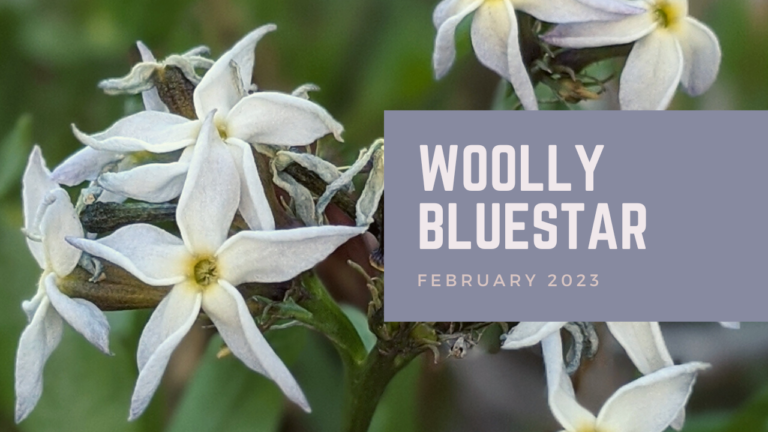
Plant of the Month: Woolly Bluestar

Our Plant of the Month for February 2023 is Amsonia tomentosa, commonly known as Woolly Bluestar, Woolly Amsonia, Small Leaved Amsonia, or Gray Amsonia.

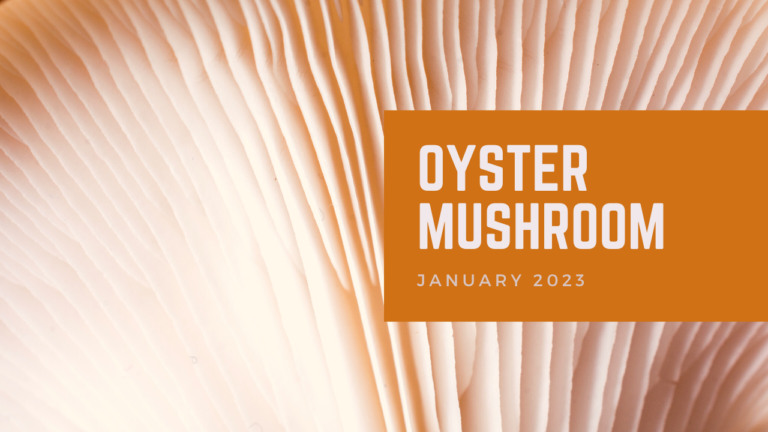
Oyster Mushroom

Plant of the Month: Oyster Mushroom

Our plant of the month for January isn’t a plant at all, it’s a fungus!
Botanical name: Pleurotus ostreatus
Common name(s): Oyster Mushroom, Pearl Oyster Mushroom

About the Region

Fall Symposium 2025 Logo - Teach for the Future

Salado, the location of our Fall 2025 Symposium, lies at the intersection of two ecoregions: the Edwards Plateau (Limestone Cut Plain) and Blackland Prairie (Northern Blackland Prairie).

The Edwards Plateau area is also called the Hill Country; however, this general term covers a much larger area extending farther north. Spring-fed creeks are found throughout the region; deep limestone canyons, rivers, and lakes (reservoirs) are common. Ashe juniper is perhaps the most common woody species found throughout the region. Additional woody species include various species of oak, with live oak (Quercus fusiformis) being the most common. Sycamores (Platanus occidentalis) and bald cypress (Taxodium distichum) border waterways. This area is well known for its spring wildflower displays, though they may be viewed in spring, late summer, and fall, as well. According to Texas Parks and Wildlife, average annual rainfall in the Edwards Plateau ranges from 15 to 34 inches.

The Blackland Prairie extends from the Red River south to San Antonio, bordered on the west by the Edwards Plateau and the Cross Timbers, and on the east by the Post Oak Savannah. Annual rainfall averages 30 to 40 inches, with higher averages to the east. This region is dominated by prairie species. The most common grass species include little bluestem (Schizachyrium scoparium) and Indian grass (Sorghastrum nutans) in the uplands and switchgrass (Panicum virgatum) in the riparian areas and drainages. Common herbaceous flowering plants include salvias, penstemons, and silphiums. This area has suffered greatly from overgrazing and agricultural use. Few intact areas remain, though many of the plants can be found along county roadsides throughout the region.

Our fall Symposium host chapter, the Tonkawa Chapter, includes both of these ecoregions.

Source: Wildflowers of Texas by Michael Eason