
Rock Rose

Pavonia lasiopetala

Other common name(s):

Rose Pavonia, Rose Mallow, Pavonia, Wright Pavonia

Family:

Malvaceae (Mallow Family)

Plant Ecoregion Distribution Map

This map uses data from the US EPA. EPA  servers have been offline frequently so maps may not display. We are working on a solution.

Edwards Plateau
Balcones Canyonlands, Edwards Plateau Woodland, Llano Uplift, Semiarid Edwards Plateau
Semiarid Edwards Bajada

Plant Characteristics

Growth Form

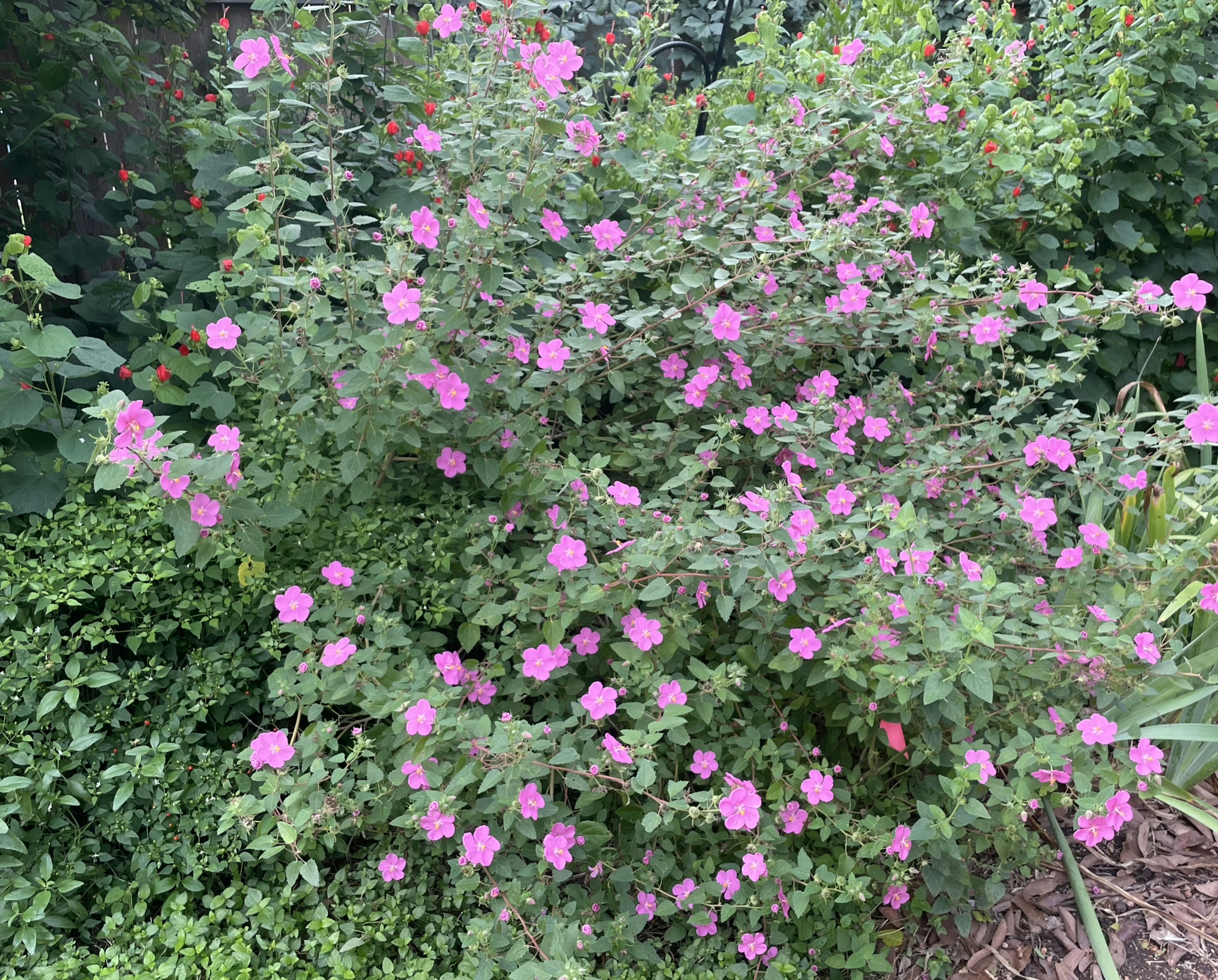
Shrub

Height

3
to
4
ft.

Spread

3
to
4
ft.

Leaf Retention

Deciduous

Lifespan

Perennial

Habitat and Care Requirements

Soil Type(s)

Caliche, Clay, Dry, Loam, Sand, Well Drained

Light Requirement

Sun, Part Shade

Water Requirement

Low

Native Habitat

Grassland, Savanna, Woodland

Bloom and Attraction

Bloom Color

Pink

Bloom Season

Spring, Summer, Fall

Seasonal Interest

Forage, Nectar, Pollen

Wildlife Benefit

Browsers, Butterflies, Deer, Hummingbirds, Moths

Maintenance

Requires little care once established. Although its native to the Edwards Plateau Ecoregion, it adapts to a wide range of soil types and is popular in nurseries. Tends to get leggy, light pruning will encourage bushiness. Mildew is unavoidable – sometimes more sun will help make it go away. Native habitat: dry, rocky woods and slopes, pastures, savannas, ditches, ravines, depressions, open woodlands.

Description

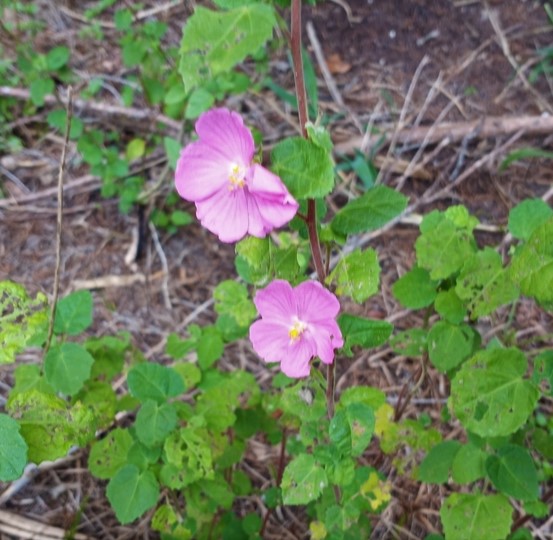
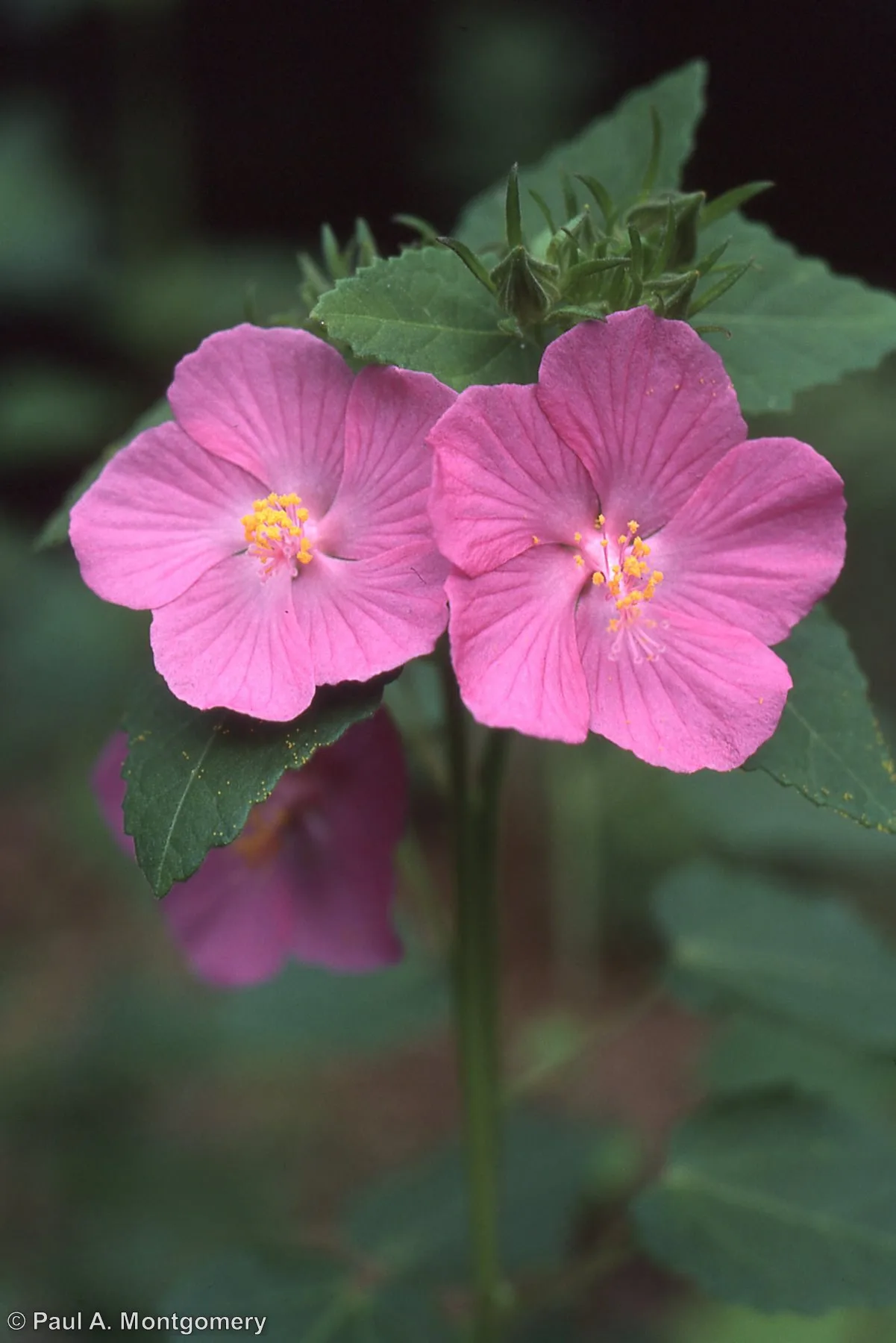
Blooms April-November. A small, branched shrub with velvety, scalloped leaves. Rose colored hibiscus-like flowers have a yellow column formed by the pistil and stamens. The fruit is a 5-lobed capsule.
Previous Scientific Name(s): Pavonia wrightii

References

1) Griffith, Bryce, Omernick & Rodgers (2007). Ecoregions of Texas. 2) Miller, George O., Landscaping with Native Plants of Texas 2nd Ed., 2013, pg 48. 3) Wasowski and Wasowski, Native Texas Plants Landscaping Region by Region, 1991, pg. 255. 4) https://www.wildflower.org/plants/result.php?id_plant=PALA13. 5) http://bonap.net/TDC/Image/Map?taxonType=Species&taxonId=14695&locationType=County&mapType=Normal. 6) https://www.itis.gov/servlet/SingleRpt/SingleRpt?search_topic=TSN&search_value=21722#null, 7) https://www.itis.gov/servlet/SingleRpt/SingleRpt?search_topic=TSN&search_value=21722#null, 8) Native and Adapted Landscape Plants, City of Austin and Texas A&M, 2014., 9) chrome-extension://efaidnbmnnnibpcajpcglclefindmkaj/https://plants.usda.gov/DocumentLibrary/factsheet/pdf/fs_pala13.pdf
Material Treatment Method Collection References
Seed Scarification Seed coat thickness varies. More uniform germination rates may be achieved by first soaking the seeds in hot water. Seeds can be collected from the capsule when it turns brown, but before it becomes dry and splits. https://www.wildflower.org/plants/result.php?id_plant=PALA13
Softwood Cutting Take cuttings in spring before plant starts to bloom. Cut a stem three to six inches long, just below the node. Remove all but the top leaves and place in vermiculite. https://www.wildflower.org/plants/result.php?id_plant=PALA13

About the Region

2026 Fall Symposium Logo

This low-elevations region of Texas extends inland from the barrier islands, about 60 or so miles, and stretches from Brownsville to Louisiana. In total, it covers about 9.5 million acres, with a high point of 150 feet in elevation. More than 1000 species of plants can be found in this region. On the southern end, species more common in Mexico (such as Sabal mexicana) and Central America occur.

The barrier islands provide us with dune systems, and clay flats to the inland side, which have species found in these areas alone. Many plants here, such as Ipomoea pes-caprae (beach morning glory), can be found throughout tropical regions of the globe. I’ve encountered the same species on the beaches of Guam.

Once inland, vast marshes and wet prairies occur. Occasionally, oak (Quercus fusiformis) groves can be found. Common grasses include species of Bothriochloa, Paspalum, and Sporobolus; eastern gamagrass (Tripsacum dactyloides); and switchgrass (Panicum species). Many rivers and creeks cut through the Gulf Prairies, and along these riparian areas various species of trees, Sabal minor, and other plants adapted to clay soils can be found. Due to overgrazing, farming, and fire suppression, woody species such as mesquite (Prosopis glandulosa) and huisache (Acacia farnesiana), and invasive species such as chinaberry (Melia azedarach), Brazilian pepper (Schinus terebinthifolius), and Chinese tallow (Sapium sebiferum) have increased and displaced our native flora.

Source: Wildflowers of Texas by Michael Eason