Fredericksburg Chapter

Fredericksburg


Explore the garden with us Tuesday, April 28
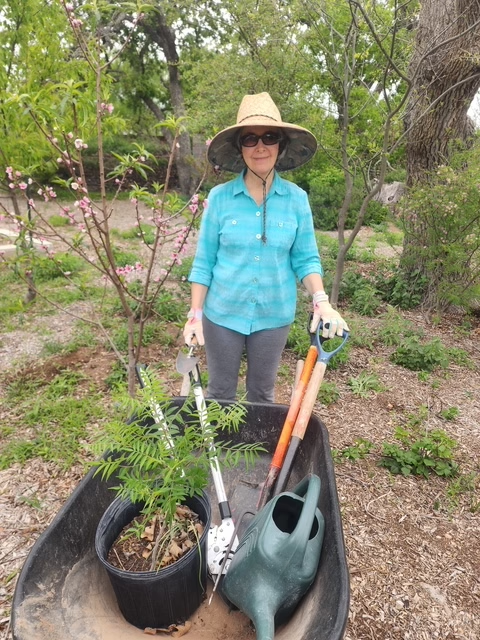
Paula Stone, gardener extraordinaire and past president of the Fredericksburg chapter, entices us with the promise of fewer hours with garden chores and more time spent in the pleasure of your accomplishment.  “Designing for Maintenance” puts you in control of your destiny. 

The Fredericksburg chapter of the Native Plant Society of Texas meets the 4th Tuesday of each month.

Next meeting: April 28 , 2026
   St. Joseph’s Halle   (click link for a map)
(212 W. San Antonio St., Fredericksburg).

6:30 greeting friends new and old

7:00 ~ This month ‘s business meeting & presentation:


If your day doesn’t quite manage in-person attendance,

Join us @ 7:00 p.m. on our YouTube channel: Fredericksburg Texas Native Gardening

Click “live” to see the scheduled meeting. Click on that meeting to join. The chat window will be open for questions during the presentation for those who have subscribed to the channel.

Designing for Maintenance with Paula

In 2009 Paula Stone bought 10 acres of worn out land on the edge of Fredericksburg. The vision this avid native plant gardener had was not what she saw – a land littered with tires, washing machines and golf balls – but of one that incorporated the natural beauty and life of Texas.
Read More »
Gardens of Texas: Growing with Resilience

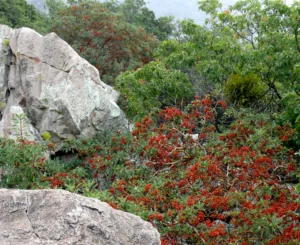
Pam Penick, our March 24 Fredericksburg speaker, is a Texas garden writer, speaker, and advocate for climate-resilient design. This month she shares practical strategies for creating gardens that weather the storms in our changing climate and grow stronger — and see how cultivating resilience in your landscape can also cultivate it in yourself.
Read More »
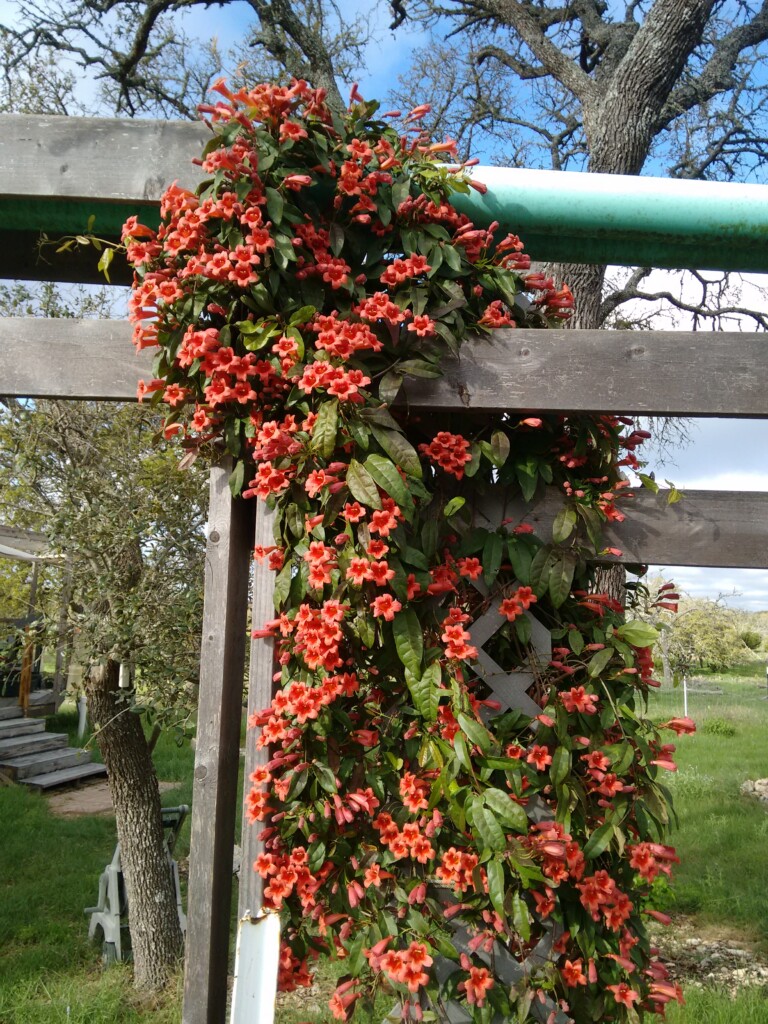
Landscape photo looking up hill at large stone outcrops and trees covered in red blooms
Lessons Learned Running a Native Plant Nursery.

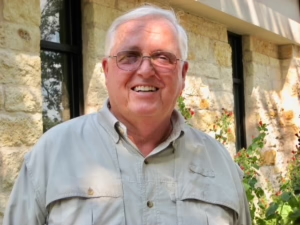
Nurseries didn’t offer native plants in the early 1990s when the Winninghams began searching for those plants that thrive and support the ecology of the Texas Hill Country. As they explored western Texas as far as Big Bend, they began collecting seeds and cuttings, including some for the madrone trees that the nursery has become famous for. “There are a whole host of positive aspects about a native plant business. I want to share the amazing and unexpected things I have leaned.” Dr David Winningham said.
Read More »
Celebrating Ward Miller (1937-2026)

Ward Miller – vice president in 2011, president in 2015, a gardener (but really more a landscaper), a good friend and mentor -always. Ward passed away Monday, February 2, in Austin at Austin Heart. He left his footprints on our lives. His influence continues.

Read More »

Where is our chapter?

If you draw an equilateral triangle with Austin and San Antonio anchoring the easternmost points.

The triangle climbs onto the Edwards Plateau, its tip touching Fredericksburg and Gillespie County. This is Hill Country!

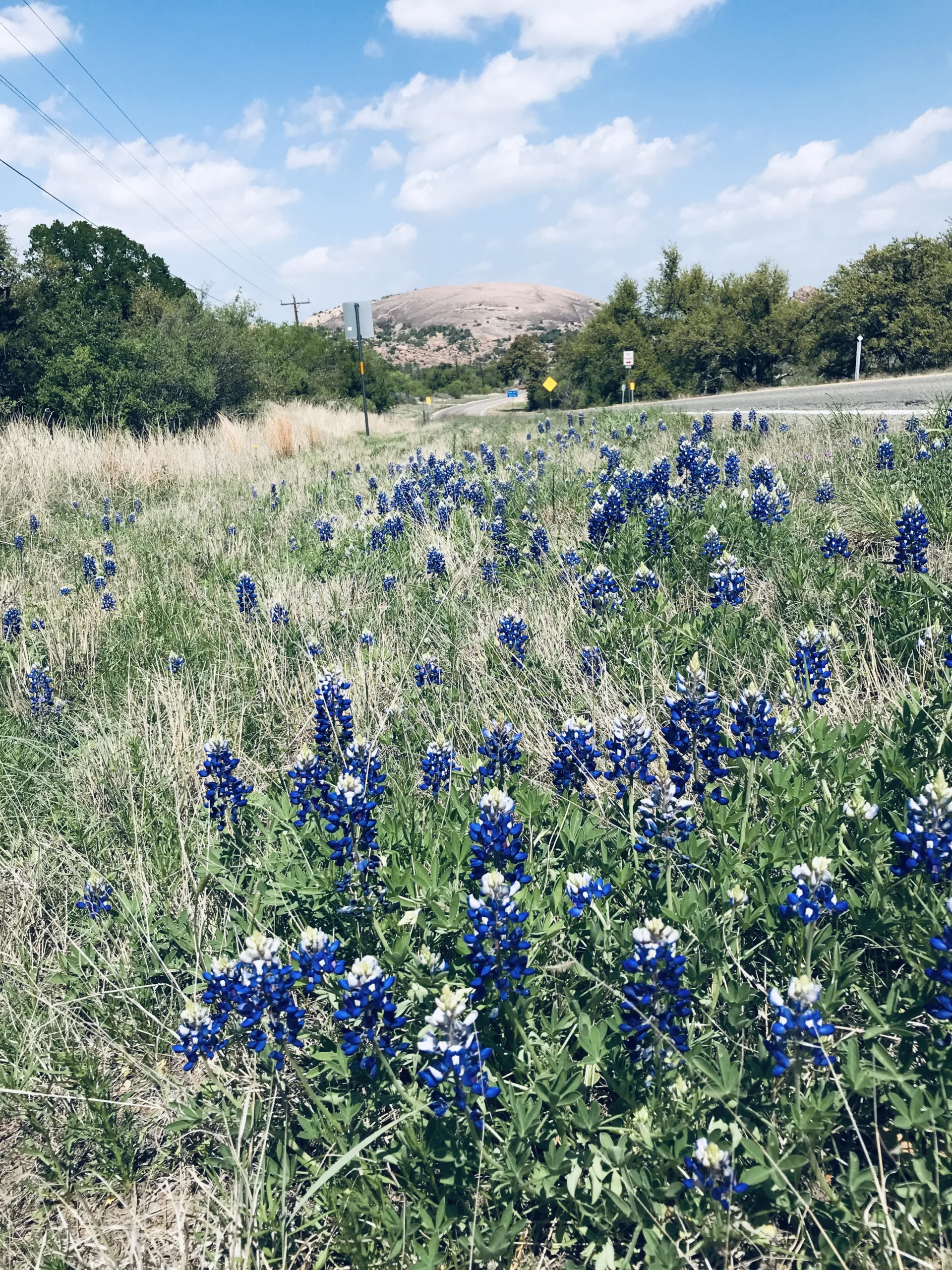
The pink dome of Enchanted Rock rises to the north of us.

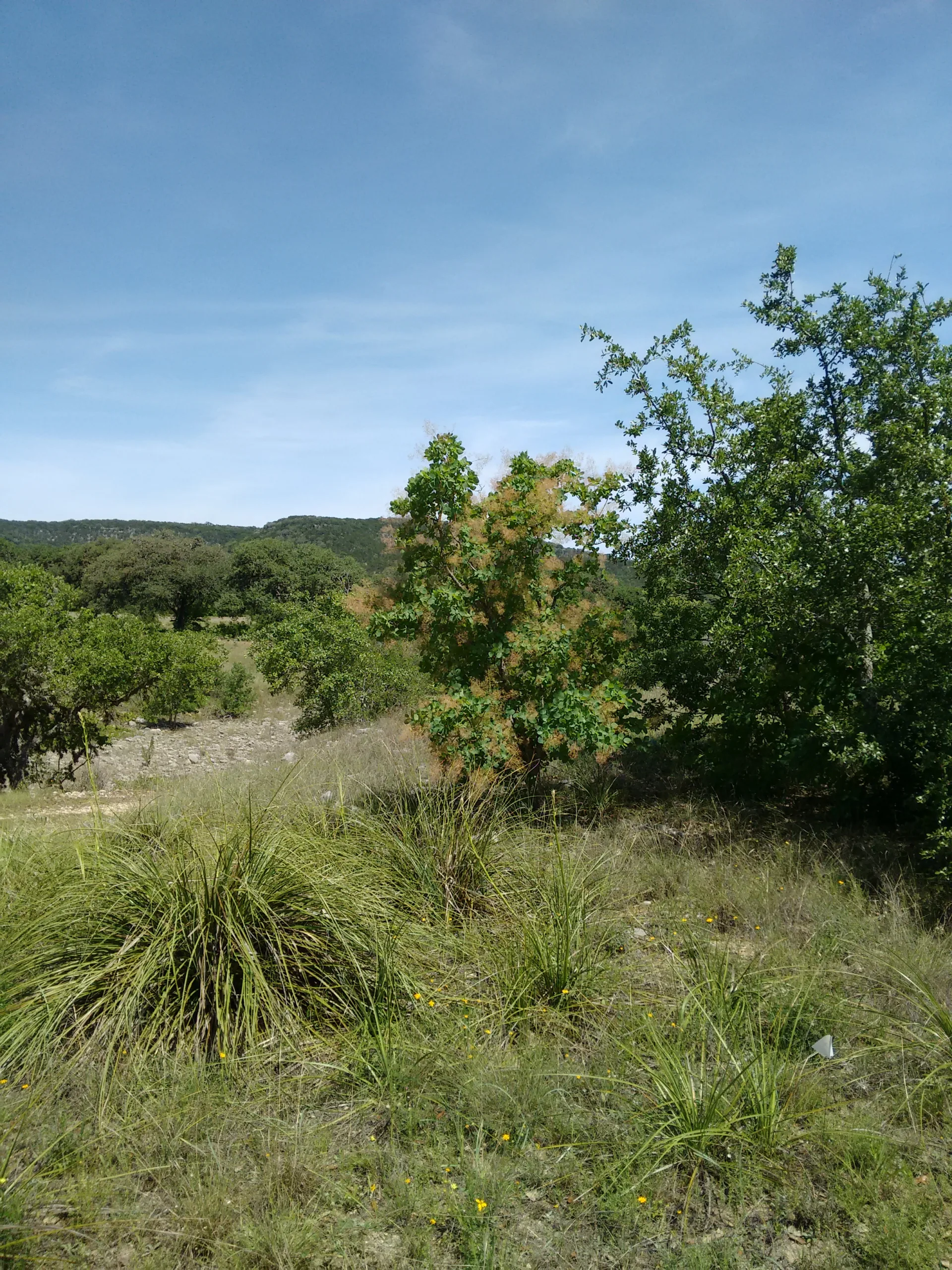
This entire area is an intricate patchwork of oak and juniper woodlands, savannas interwoven with grasslands, tree mottes and shrubs. You have reached the homeland of the Fredericksburg chapter of the Native Plant Society

Ours is truly a rich and diverse natural heritage.

Please join us in exploring the heart of our native Edwards Plateau ecosystem.

Playlist

13 Videos

About the Region

Fall Symposium 2025 Logo - Teach for the Future

Salado, the location of our Fall 2025 Symposium, lies at the intersection of two ecoregions: the Edwards Plateau (Limestone Cut Plain) and Blackland Prairie (Northern Blackland Prairie).

The Edwards Plateau area is also called the Hill Country; however, this general term covers a much larger area extending farther north. Spring-fed creeks are found throughout the region; deep limestone canyons, rivers, and lakes (reservoirs) are common. Ashe juniper is perhaps the most common woody species found throughout the region. Additional woody species include various species of oak, with live oak (Quercus fusiformis) being the most common. Sycamores (Platanus occidentalis) and bald cypress (Taxodium distichum) border waterways. This area is well known for its spring wildflower displays, though they may be viewed in spring, late summer, and fall, as well. According to Texas Parks and Wildlife, average annual rainfall in the Edwards Plateau ranges from 15 to 34 inches.

The Blackland Prairie extends from the Red River south to San Antonio, bordered on the west by the Edwards Plateau and the Cross Timbers, and on the east by the Post Oak Savannah. Annual rainfall averages 30 to 40 inches, with higher averages to the east. This region is dominated by prairie species. The most common grass species include little bluestem (Schizachyrium scoparium) and Indian grass (Sorghastrum nutans) in the uplands and switchgrass (Panicum virgatum) in the riparian areas and drainages. Common herbaceous flowering plants include salvias, penstemons, and silphiums. This area has suffered greatly from overgrazing and agricultural use. Few intact areas remain, though many of the plants can be found along county roadsides throughout the region.

Our fall Symposium host chapter, the Tonkawa Chapter, includes both of these ecoregions.

Source: Wildflowers of Texas by Michael Eason